Define the cause-and-effect
We review design intent, approved documentation and system logic to establish the scenarios and expected responses that need to be tested.

03 Testing & verification
Clarity before action.
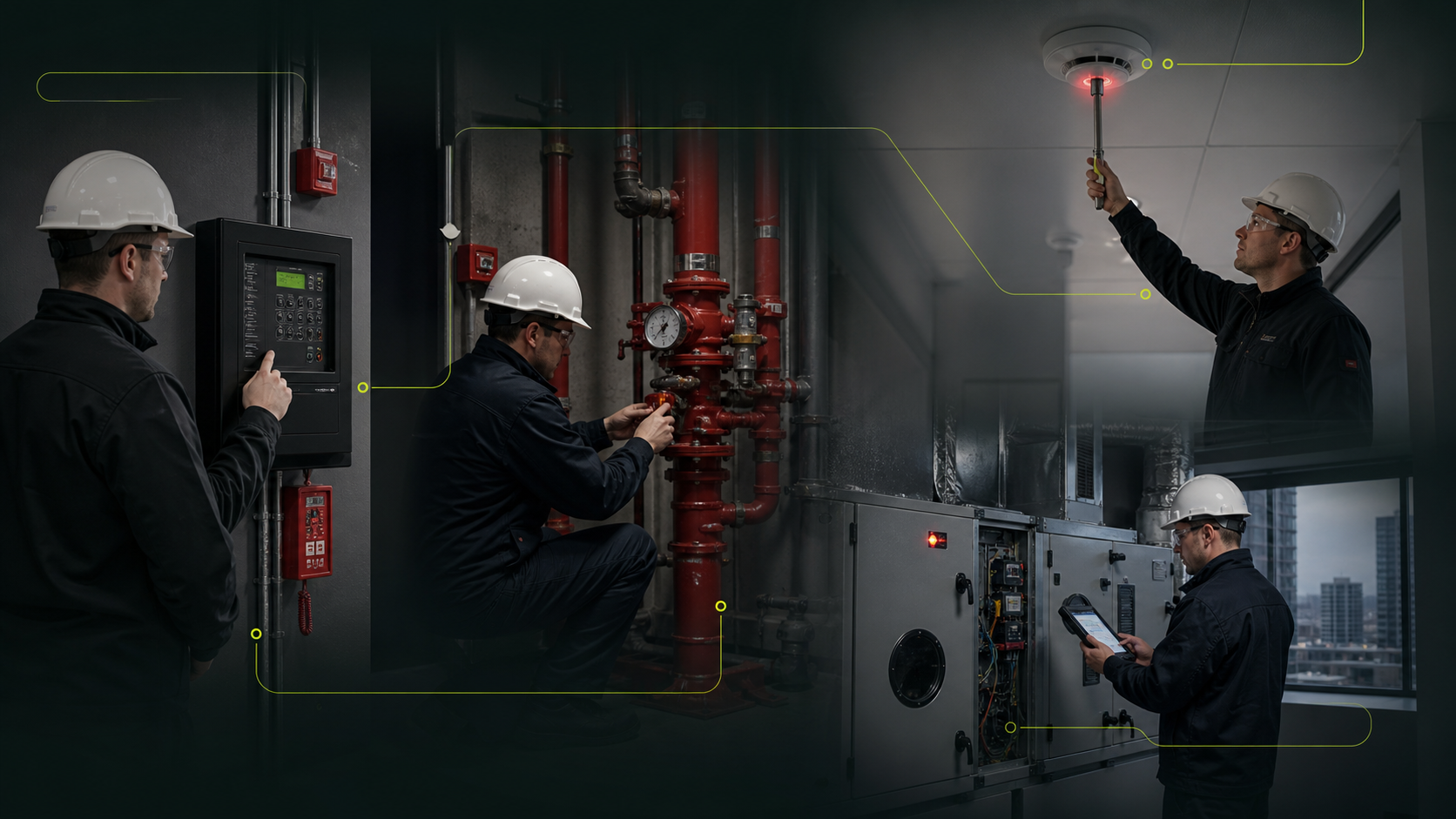
Fire and life-safety systems do not operate in isolation during an emergency. A fire alarm may need to trigger mechanical services, smoke control systems, lifts, access-controlled doors, emergency warning systems and other building services as part of the required sequence of operation.
System Interface Testing checks whether these systems communicate and respond as they are intended to.
National Building Compliance carries out independent System Interface Testing to assess how interconnected fire and life-safety systems respond during relevant alarm and emergency conditions.
We focus on the interaction between systems and the required cause-and-effect sequence. This helps identify issues such as failed interfaces, incorrect sequencing, missing connections or equipment that does not respond when required.
We review design intent, approved documentation and system logic to establish the scenarios and expected responses that need to be tested.
Testing is coordinated across relevant contractors and systems, with observations captured against each required interface.
Failures and inconsistencies are documented clearly, then tracked through rectification and verification.
Next service · 04
Combustible Cladding↗︎